
School of Computer Science, carnegie Mellon
Site Map Contact Info Directory About SCS Careers Giving to SCS SCS Dean's Advisory Board

News Brief - November 7, 2012

PSC Deploys Sherlock System for Unlocking Secrets of Big Data

The Pittsburgh Supercomputing Center (PSC) and YarcData have announced the deployment of "Sherlock," a uRiKA graph-analytics appliance from YarcData for efficiently discovering unknown relationships or patterns hidden in extremely large and complex bodies of information.

Funded through the Strategic Technologies for Cyberinfrastructure program of the National Science Foundation, Sherlock features innovative hardware and software, as well as PSC-specific enhancements, designed to extend the range of applicability to scales not otherwise feasible.

The project complements ongoing leadership in data-intensive computing at Carnegie Mellon University. "We're very pleased that the PSC will have this new capability for analyzing large-scale, unstructured graphs," said Randal E. Bryant, dean of the School of Computer Science.

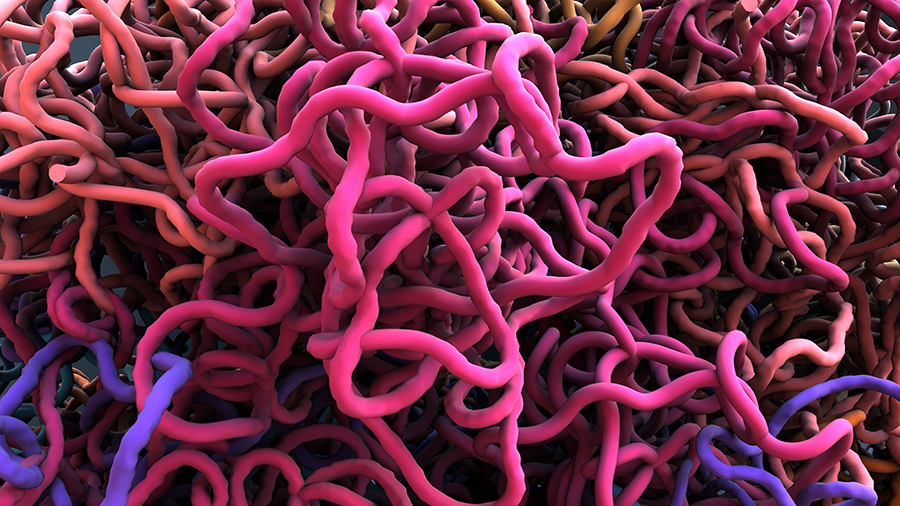
"Such data structures pervade many of the big data applications being investigated by researchers," he explained. These areas are as diverse as biology (e.g., the connectivity between molecules in a protein), networks (e.g., the structure of the world-wide web), and artificial intelligence (e.g., the relationships between different concepts.) "The uRiKA system will enable scientists to deal with far more complex graphs than would otherwise be possible," he added.

More information is available at www.psc.edu/sherlock

Follow the School of Computer Science on Twitter @SCSatCMU.

Contact:

Byron Spice
412-268-9068
bspice@cs.cmu.edu

Sherlock, a uRiKA graph-analytics appliance from YarcData for efficiently discovering unknown relationships or patterns hidden in extremely large and complex bodies of information.
About Carnegie Mellon: Carnegie Mellon is a private research university with a distinctive mix of programs in engineering, computer science, robotics, business, public policy, fine arts and the humanities. More than 10,000 undergraduate and graduate students receive an education characterized by its focus on creating and implementing solutions for real problems, interdisciplinary collaboration, and innovation. A small student-to-faculty ratio provides an opportunity for close interaction between students and professors. While technology is pervasive on its 144-acre Pittsburgh campus, Carnegie Mellon is also distinctive among leading research universities for the world-renowned programs in its College of Fine Arts. A global university, Carnegie Mellon has campuses in Silicon Valley, Calif., and Qatar, and programs in Asia, Australia and Europe. For more, see www.cmu.edu.