School of Computer Science, carnegie Mellon
Site Map Contact Info Directory About SCS Careers Giving to SCS SCS Dean's Advisory Board

News Brief - January 23, 2012

Clarke to Receive Honorary Doctorate from Vienna University of Technology

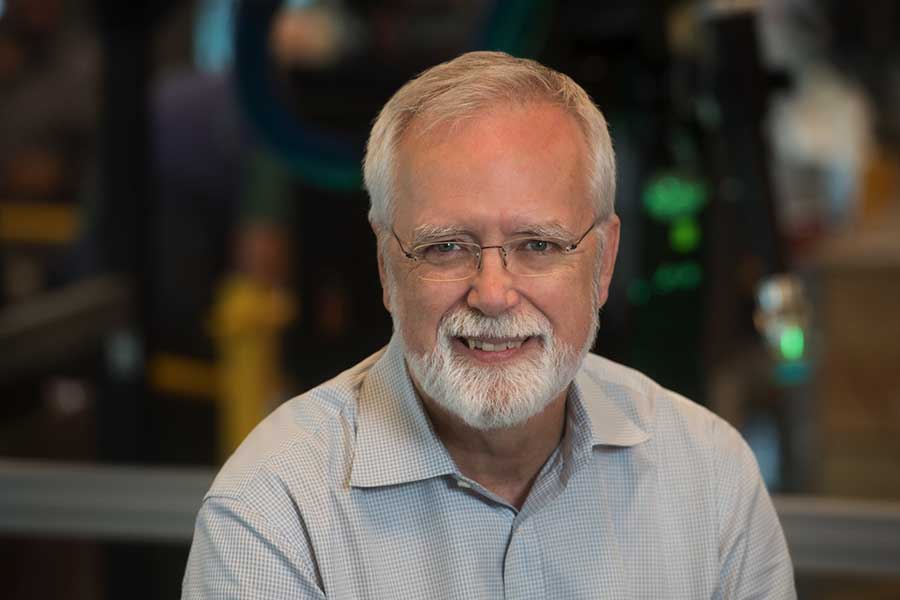
Edmund M. Clarke, FORE Systems University Professor of Computer Science and of Electrical and Computer Engineering, will receive an honorary doctorate from the Vienna University of Technology at an award ceremony Jan. 26 in Vienna, Austria.

The event culminates in a formal Viennese Ball, for which Clarke and his wife, Martha, have prepared with waltzing lessons. The ceremony is part of the opening of the new Vienna Center for Logic and Algorithms, which will promote international scientific collaboration in several high priority research areas. Those include Clarke’s specialty, verification of hardware and software designs.

“Edmund M. Clarke is among the leading computer scientists of our times,” the event program states. “Clarke’s scientific vision of systems engineering by formal logical analysis has become an important research area of computer science in Austria.”

Clarke is a pioneer in the field of Model Checking, an automated method for finding design errors in computer hardware and software. Clarke’s role in creating Model Checking was recognized by the Association for Computing Machinery (ACM) with the 2007 Turing Award, the most prestigious award in computing.

In June, Clarke will participate with 32 other Turing winners in the ACM Turing Centenary Celebration in San Francisco and with other prestigious speakers at the Alan Turing Centenary Conference at the University of Manchester, U.K. Both events will pay tribute to Alan Turing, widely considered the father of computer science, in the year of what would have been his 100th birthday.
Follow the School of Computer Science on Twitter @SCSatCMU.

Contact:

Byron Spice
412.268.9068
bspice@cs.cmu.edu

About Carnegie Mellon: Carnegie Mellon is a private research university with a distinctive mix of programs in engineering, computer science, robotics, business, public policy, fine arts and the humanities. More than 10,000 undergraduate and graduate students receive an education characterized by its focus on creating and implementing solutions for real problems, interdisciplinary collaboration, and innovation. A small student-to-faculty ratio provides an opportunity for close interaction between students and professors. While technology is pervasive on its 144-acre Pittsburgh campus, Carnegie Mellon is also distinctive among leading research universities for the world-renowned programs in its College of Fine Arts. A global university, Carnegie Mellon has campuses in Silicon Valley, Calif., and Qatar, and programs in Asia, Australia and Europe. For more, see www.cmu.edu.